Why is my mini split leaking water? The drain line, almost every time
Why is my mini split leaking water? Nine times in ten it's a blocked or sagging condensate drain. The safe checks to make now, the fixes, and signs of worse.
The short answer
A mini split leaks water indoors when the condensate it pulls from the air can't get out: a clogged drain line, a sagging hose, a failed condensate pump or a dirty filter icing the coil. Clear the drain and clean the filter first. Ice on the coil that returns means call a tech.
- Clear the drain from the outdoor end: a shop vac sealed over the outlet pulls most clogs in a minute.
- Frost on the coil means thaw it in fan mode and rinse the filters before you try anything else.
- Ice that returns with clean filters and a clear drain, or hissing at the line set, needs a licensed tech.
On this page
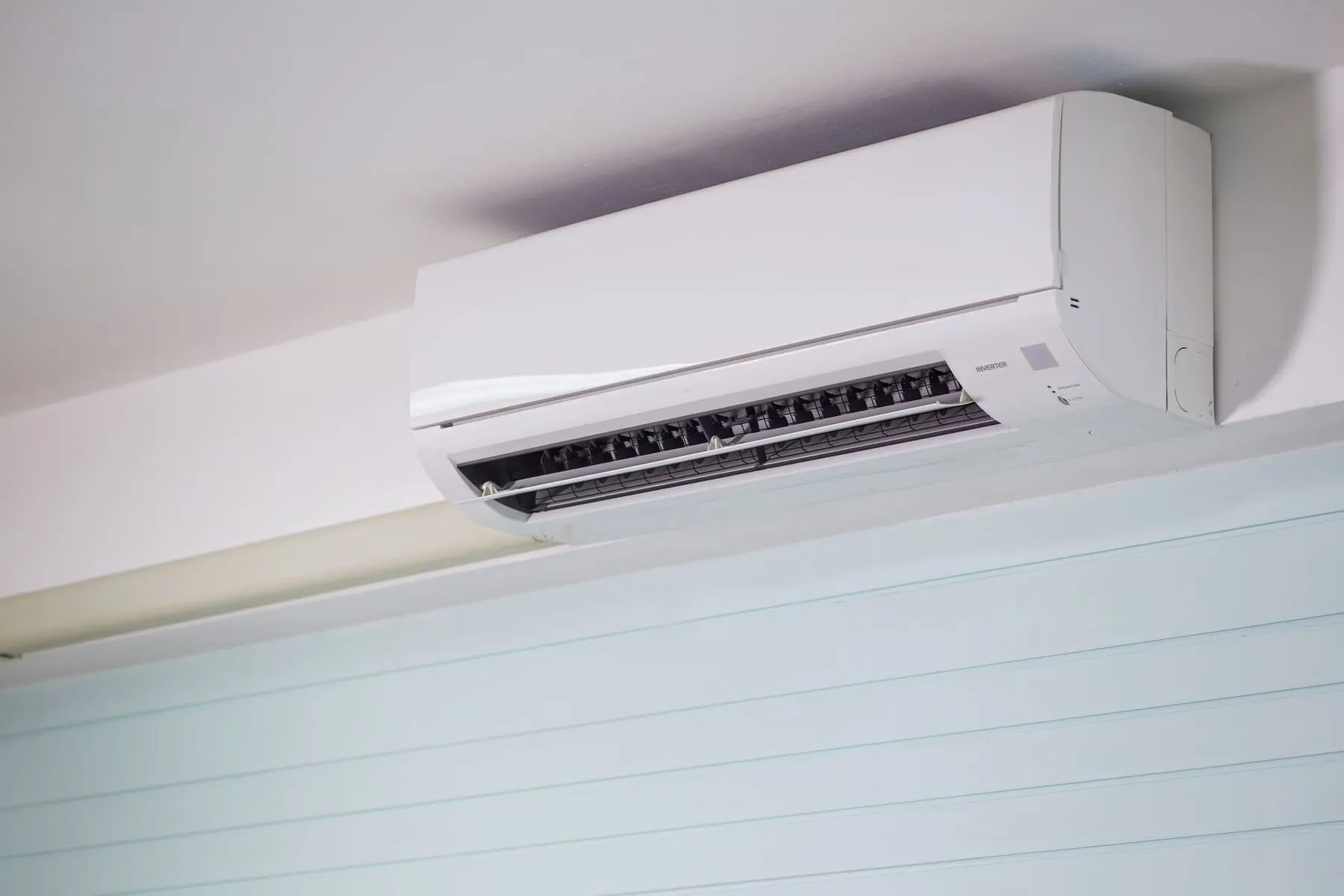
Why is your mini split leaking water? Because the water is supposed to be there, and it can’t get out. An indoor head pulls moisture out of the air every hour it cools, sometimes a pint or more in a humid room. That water runs off the coil into a shallow pan and out through a drain hose by gravity, or through a condensate pump where gravity won’t oblige. When the hose clogs, sags or kinks, or the pump quits, the pan fills and spills into your room. That’s the cause nine times in ten, and you can fix it yourself.
The tenth time, the coil has iced over and is melting. That traces back either to a filter that went unrinsed or to low refrigerant. The filter is yours to fix; refrigerant isn’t, and the checks below separate the two. The maintenance hub has the full upkeep calendar. If the unit is leaking and also blowing warm, work through this first and then mini split not cooling.
Check these first, with a flashlight
Switch the unit off at the remote. You won’t need tools beyond a flashlight, and nothing here goes near the refrigerant or the wiring.
- Find the drain outlet. It’s a small hose, usually bundled with the line set, that exits the wall near the outdoor unit or a few feet from it. On a humid day with the unit running, it should drip steadily. A dry outlet plus a wet wall indoors means the water is stopping somewhere in between.
- Look at the filters. Open the front panel and lift out the mesh screens. If you can’t see through them, airflow has dropped and the coil may be icing. Rinse, dry, refit.
- Look at the coil. With the filters out, shine the light on the aluminum fins. Frost or a sheet of ice means the coil is running too cold. Put towels under the head and switch to fan-only mode for an hour to melt it before you go further.
- Check the head is level. A head that has sagged away from the drain side (it happens when the bracket screws didn’t all hit a stud) tilts the pan so water pools at the far end and spills. Set a small level on top of the unit.
- Listen for the pump, if you have one. If the drain couldn’t run downhill at install, there’s a condensate pump, either in a box near the head or inside the line set cover. With the unit running it should click on and whir every few minutes. Silence while the pan fills means the pump or its float has failed.
- Check the mode on the remote. A unit left in dry (dehumidify) mode on a very humid day makes a lot of water. That’s not a fault, but it’ll find a weak drain faster than cool mode does.
Clearing a clogged condensate drain
The clog is biofilm, a slime of dust and growth that builds up inside the hose over a season or two. Work from the outdoor end toward the head, never the other way, so you pull the blockage out instead of pushing it into the pan.
- Vacuum it. Seal a wet/dry shop vac over the drain outlet (tape, a rag, or a purpose-made rubber attachment) for thirty to sixty seconds. That pulls most clogs straight out, and you’ll often see a plug of gray slime arrive.
- Brush it. For a stubborn clog, feed a long flexible drain brush in from the outlet and work it back and forth. Rinse and repeat.
- Flush it. Open the front panel, lift the filters, and pour a cup of clean water slowly into the drain pan at the bottom of the coil. It should run out of the outdoor outlet within a few seconds. If it does, you’re done. If it pools, something’s still restricting it.
- Do not blow compressed air toward the indoor head, pour bleach into the pan (it attacks the aluminum and the gaskets), or disconnect the drain hose at the head unless you can see the connection and refit it the same way.
A drain tablet in the pan at the start of each season slows the slime coming back. The cleaning guide folds a drain flush into the yearly clean so this clog doesn’t return.
A hose that sags or kinks
Condensate drains by gravity, and gravity needs a continuous fall. Follow the hose from the head to the outlet, through the wall sleeve and along the line set cover if you can open it. Anywhere it dips and rises again is a trap: water sits, slime grows, and the next clog starts there. Re-secure the hose so it falls steadily the whole way, and cut out a kink if there’s enough slack. Make sure the outdoor end isn’t buried in mulch, pinched under the line set cover, or sitting in a puddle. If the installer looped the drain inside the wall with no fall, no hose fix will help. That run needs a condensate pump.
If there’s a condensate pump
A pump lifts water from the pan to a point where it can drain by gravity. Three parts fail: the float switch that senses water, the pump itself, and the small-bore tubing it pushes through. Most pumps have a float that cuts power to the indoor unit when the reservoir fills faster than the pump can empty it, so the system stops making water. That’s the symptom people describe as “the unit shuts off and then leaks.” Cleaning the reservoir and float and clearing the tubing fixes most of it. A pump that hums but doesn’t move water, or does nothing at all, gets replaced. The condensate pump guide covers choosing and fitting one, and whether you need one.
Ice on the coil from a dirty filter
A filter you can’t see through starves the coil of air. The refrigerant keeps absorbing heat, the fins drop below freezing, and condensate freezes on them instead of dripping off. The pan stays dry while the ice builds. Then a warm afternoon or a mode change melts it all at once, and the pan overflows. The tell is frost or ice on the coil while the unit runs. Thaw it in fan mode, rinse the filters, run the unit again and watch it for an hour. If the coil stays clear, it was the filter.
Stop and call a licensed tech when
- The coil ices up again with clean filters and a free drain. Low refrigerant makes the coil run too cold; so can a failed fan motor or a stuck expansion valve. All three are sealed-system or electrical work.
- There’s ice on the line set outside, at the small copper pipe or the outdoor unit’s connections, or you hear hissing or bubbling. That’s a refrigerant leak. Never open the refrigerant circuit yourself; it requires an EPA 608 certification and the equipment to recover, evacuate and recharge.
- The leak comes with weak cooling, a compressor that runs constantly, or an error code that survives a power cycle.
- Water is coming from inside the wall rather than from the head. The drain may have separated at a connection in the wall sleeve, and finding it means opening the wall.
- The breaker has tripped, or water has reached the electrical connections. Cut power at the breaker and leave it off.
The repair guide explains what each of these calls involves and what a tech charges for.
Keeping the drain clear from now on
Rinse the filters every two to four weeks in season. Flush the drain with a cup of water at the start of each season and drop in a tablet. Once a year, deep clean the coil and blower, which starves the slime of the dust it feeds on. Check that the outdoor drain outlet is clear each time you mow. If the unit is new and already leaking, check that the head is level and the drain falls the whole way before blaming anything else; those are the two install mistakes behind most first-month leaks. Still shopping? Run the room through the size calculator. An oversized unit short-cycles, never dries the coil, and grows exactly the slime that clogs drains.
If it’s still dripping tomorrow
Go back to the coil with the flashlight. If there’s ice again after clean filters and a drain that ran a cup of water straight through, stop there; that’s refrigerant or a fan fault, and it belongs to a licensed tech. If the coil’s clear but the wall is still wet, the drain has separated inside the sleeve, which is also a call. If it stopped, book the yearly clean for spring with how to clean a mini split so the drain doesn’t clog again.
Parts you’ll need
- Check price on Amazon
Drain line cleaner tablets
Drop one in the drain pan each season to slow the slime that clogs condensate lines.
- Check price on Amazon
Flexible drain line brush
A long, thin brush fed in from the outdoor end pulls out the biofilm a vacuum can't.
- Check price on Amazon
Wet/dry vac drain attachment
Seals over the drain outlet so a shop vac can pull a clog toward you in under a minute.
- Check price on Amazon
Condensate pump
The fix when the drain can't run downhill, or the replacement when the existing pump has failed.
- Check price on Amazon
Small torpedo level
Checks the head is level or tilts slightly toward the drain side, not away from it.
Questions people ask
Why is my mini split leaking water inside?
The unit pulls water out of the air as it cools, and that water has to leave through a drain hose or a condensate pump. If the hose is clogged with slime, sagging so water pools, kinked, or the pump has failed, the pan overflows into the room. A dirty filter can also ice the coil, which then melts in a rush.
Is it normal for a mini split to drip water outside?
Yes. The indoor condensate drain exits near the outdoor unit or through the wall, and a steady drip on a humid day is the system working. In heating mode the outdoor unit itself drips during defrost. Dripping indoors, or water running down the wall under the head, is never normal.
How do I unclog a mini split drain line?
Switch the unit off, find the drain outlet outside, and pull the blockage toward the outlet: a wet/dry vac sealed over the end for a minute usually does it, or a long flexible brush fed in from the outlet. Then pour clean water into the drain pan to confirm it runs out freely. Don't blow compressed air toward the head.
Can a dirty filter cause a mini split to leak?
Yes, and it's the second most common cause. A loaded filter starves the coil of air, the coil runs colder than designed and ices over, and when the ice melts it overwhelms the drain pan. If you find frost on the coil, switch to fan mode to thaw it, clean the filters, and see whether it returns.
When is a leaking mini split a refrigerant problem?
When the coil ices up again after you've cleaned the filters and cleared the drain, or when the leak comes with weak cooling, a hissing sound, or ice on the line set outside. Low refrigerant makes the coil run too cold. That's a sealed-system fault and needs a licensed tech with an EPA 608 card.
Why does my mini split leak only sometimes?
A partial clog or a hose with a slight sag leaks only when the unit makes more water than the restricted drain can carry: humid days, long run times, a house full of people. The fix is the same as a full clog, with extra attention to the slope of the hose along its whole run.
Reader-supported. If you buy through a link on this page we may earn a commission, at no cost to you. How that works.