Mini split heat pump: how it heats, how cold it works, which to buy
Almost every mini split sold today is a heat pump: it heats in winter and cools in summer from the same outdoor unit. The indoor half comes in more shapes than the wall-mounted head everyone pictures, and the shape changes what it costs and where it can go.
Guides in heat pumps & types
Best picks
 Ceiling cassette mini split: flush-mounted comfort for open roomsA ceiling cassette mini split recesses into the ceiling between joists and distributes air in four directions from a flush grille, so it covers an open room or kitchen more evenly than a wall head. It needs about a foot of clear depth above the ceiling, a condensate route, and a pro install.
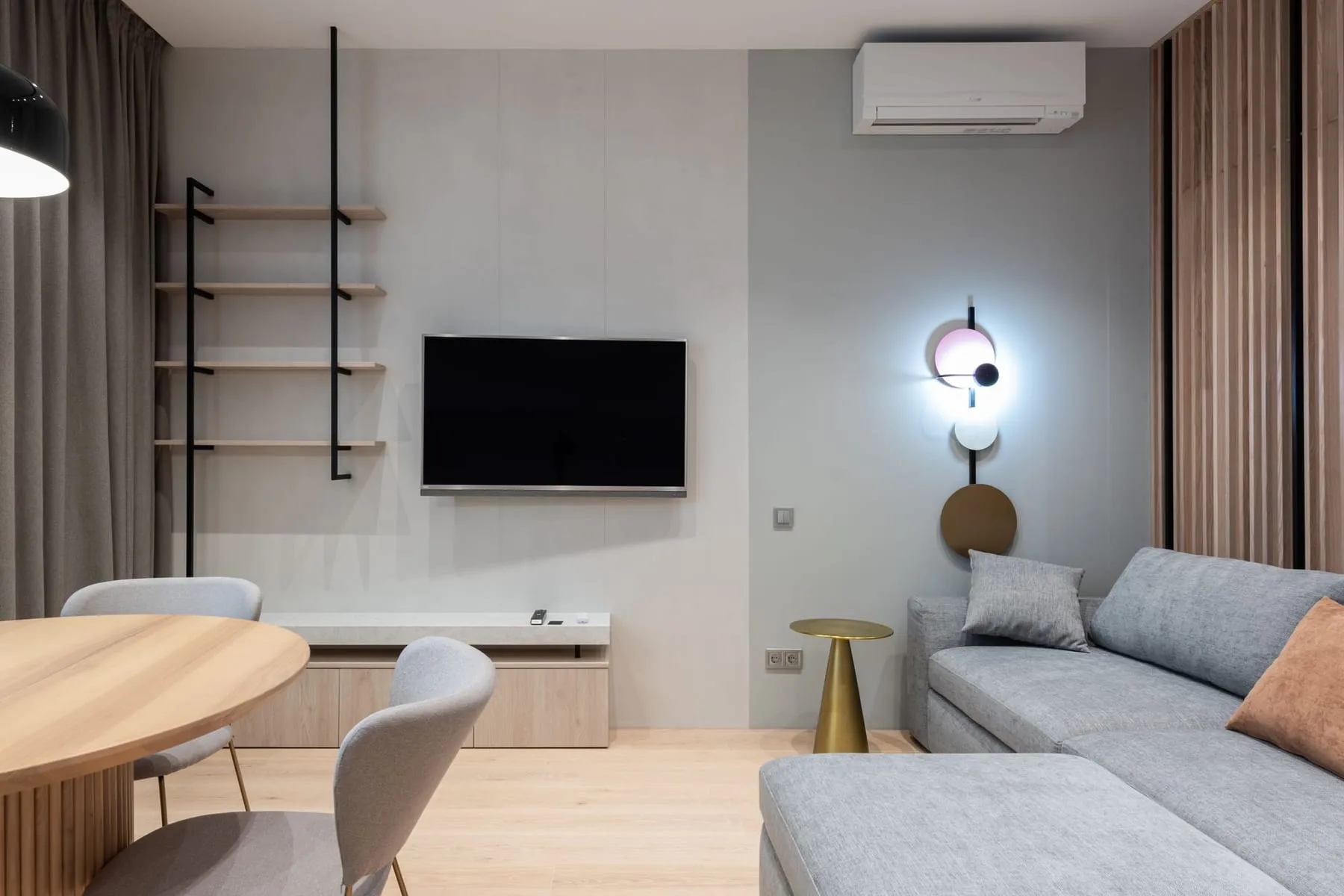 Ducted mini split: when a concealed air handler beats a wall unitA ducted mini split uses a low-profile air handler hidden in a ceiling, closet or attic to serve two to four nearby rooms through short duct runs, with only grilles showing. It costs more to install than a wall unit and needs careful duct design, but it's the answer when you want the comfort without the box on the wall.
 Hidden ductless mini split: the ways to cool a room without the boxTo hide a ductless mini split, choose the indoor unit for the job: a concealed-duct air handler disappears into a ceiling or closet, a ceiling cassette shows only a flush grille, a floor console tucks under a window, and a mirror-finish wall unit stops reading as HVAC. Each costs more than a standard head, and all four are pro installs.

The short answer
Yes, a mini split heats and cools. Almost every ductless mini split sold in the US is a heat pump: it runs the refrigerant cycle one way to cool and reverses it to heat. Standard models heat well into the 20s and taper below; cold-climate models hold rated output to −13°F or lower.
- If the unit is your main heat where winters reach single digits, buy cold-climate and size for heating.
- Steam, dripping water and a stalled indoor fan for a few minutes in winter is defrost, not a fault.
- Every pre-charged DIY kit is a standard heat pump, so none of them is a sub-zero machine.
A mini split heat pump isn’t a special category of mini split. It’s almost all of them. The ductless unit cooling your bedroom in August has a reversing valve that flips the direction of its refrigerant cycle, and in January the same compressor, coils and fan pull heat out of the outdoor air and deliver it indoors. So if you’re shopping for “mini split AC and heat”, you’re shopping for an ordinary mini split. Whether it heats isn’t in doubt. How well it heats in the cold is.
There are two answers to that: standard and cold-climate. The cold-climate guide goes deeper on the sub-zero models, and the mini split vs heat pump page sorts out the vocabulary against ducted systems. Either way, start with the size calculator. In a cold climate it’s the heating load, not the cooling load, that decides the size.
How a mini split heat pump pulls heat from cold air
An air conditioner is a heat pump that only runs one way. Refrigerant evaporates in the indoor coil, soaking up heat from the room, and condenses in the outdoor coil, dumping that heat outside. Add a reversing valve and the cycle flips. Now the refrigerant evaporates outdoors, picking up heat from air that’s cold but not empty of heat, and condenses indoors to release it into the room. Because the system moves heat instead of generating it, it delivers more heat energy than the electricity it uses, often two to four times as much in mild weather.
As the outdoor temperature drops, there’s less heat to collect and the compressor works harder for each unit of it. Output falls, efficiency falls, and at some temperature the unit can’t keep up with the room. Where that point sits is what separates the two classes.
Standard or cold-climate
A standard mini split heat pump heats comfortably in the 20s°F and keeps producing heat, at a declining rate, into the teens and below. For the southern half of the US, or for a room with another heat source available, that’s plenty. Every pre-charged DIY kit falls into this class.
A cold-climate mini split pairs a compressor and controls built to keep working at low temperatures, usually with vapor injection or something similar, with a larger outdoor coil. Manufacturers publish the temperature down to which each unit holds its rated heating output, and these are the ratings we’re confident quoting: Mitsubishi Hyper-Heat (H2i) to −13°F on the MSZ-FS (Mitsubishi says current H2i wall units hold full output to 5°F and keep heating to −22°F), Daikin Aurora to −13°F, Fujitsu XLTH to −15°F, Senville AURA to −22°F and Gree Sapphire to −22°F. Below those figures the units keep heating at reduced output. They don’t switch off.
| Standard mini split | Cold-climate mini split | |
|---|---|---|
| Rated heating holds to | Roughly the 20s°F, then tapers | −13°F to −22°F on the lines above |
| Price | Lower | Higher, often a tier up |
| DIY kits available | Yes (MRCOOL DIY, Klimaire DIY) | Not in the mainstream kits |
| Who it suits | Southern US, supplemental heat, garages and bonus rooms | Northern US, main heat source, homes going off fossil fuel |
If the unit will be your main heat somewhere that sees single digits, buy cold-climate and size it for the heating load at your design temperature. For a bonus room in Georgia, a standard unit is the right money.
Reading HSPF2 and SEER2
Every spec sheet carries two efficiency ratings. SEER2 describes cooling efficiency over a season and HSPF2 describes heating efficiency over a season. Both are ratios of output to electricity used. Both were revised in 2023 with tougher test conditions, which is why older SEER and HSPF numbers don’t compare directly with the new ones. Higher is better. In a cold climate, the gap between a mid-range and a top-tier HSPF2 shows up on the winter electric bill; in a warm one you’ll barely notice it. We don’t quote specific HSPF2 figures because they change with the exact indoor and outdoor pairing. Read the spec sheet for the combination you’re buying, and check the brand review for how the line compares.
Defrost, the part that worries new owners
In cold, damp weather the outdoor coil runs below freezing and frost builds on it. Frost blocks airflow, so every so often the unit melts it by reversing briefly into cooling mode and sending hot refrigerant through the outdoor coil. Indoors, the fan slows or stops for a few minutes and the display often shows DF or a defrost symbol. Outside, you may see steam rising and water dripping from under the unit. Then it goes back to heating. It’s normal, and it happens more often near freezing than in deep cold. It’s also the reason outdoor units need to sit above the snow line with a clear drain path.
Our shortlist for heating
For a cold-climate main heat source, the shortlist is the lines with published sub-zero ratings: Mitsubishi’s Hyper-Heat, Daikin’s Aurora, Fujitsu’s XLTH, Senville’s AURA at a value price, and Gree’s Sapphire in between. Contractors reach for Mitsubishi and Fujitsu first; our Mitsubishi review and Fujitsu review cover both. In a milder climate or for a self-install, a standard unit such as the MRCOOL DIY is sensible money, as long as you accept it isn’t a sub-zero machine.
Systems worth your shortlist
Our pick for: cold-climate heating without a premium-brand price
SenvilleAURA (cold climate)
Check priceat Amazon- Sizes sold
- 9,00012,00018,00024,00036,000
- Install
- Pro install
- Heating
- −22°F rated heating
- Zones
- Single room
Read our Senville reviewListing checked November 20, 2026Our pick for: bedrooms and living rooms in cold climates where quiet matters
Mitsubishi ElectricMSZ-FS Hyper-Heat (H2i)
How to buySold through a local dealer- Sizes sold
- 6,0009,00012,00015,00018,000
- Install
- Pro install
- Heating
- −13°F rated heating; newer H2i models run to −22°F
- Zones
- Single room
Read our Mitsubishi Electric reviewListing checked November 20, 2026Our pick for: northern homes that want Daikin quiet and a strong dealer network
DaikinAurora (cold climate)
How to buySold through a local dealer- Sizes sold
- 9,00012,00015,00018,00024,000
- Install
- Pro install
- Heating
- −13°F rated heating
- Zones
- Single room
Read our Daikin reviewListing checked November 20, 2026Our pick for: efficiency and deep-cold heating at a mid price
GreeSapphire
Check priceat Amazon- Sizes sold
- 9,00012,00018,00024,000
- Install
- Pro install
- Heating
- −22°F rated heating
- Zones
- Single room
Read our Gree reviewListing checked November 20, 2026Our pick for: a homeowner who wants to install it themselves this weekend
MRCOOLDIY 5th Gen (single zone)
Check priceat Amazon- Sizes sold
- 9,00012,00018,00024,00036,000
- Install
- DIY, pre-charged
- Heating
- Heats to −13°F (maker figure)
- Zones
- Single room
Read our MRCOOL reviewListing checked November 20, 2026
Prices change every week, so we link to the seller instead of printing a number that goes stale. Some of these links pay us a commission; that doesn’t change the order. We’re still checking each row against the spec sheet line by line; cold-climate ratings are the makers’ published figures.
Indoor unit styles, all of them heat pumps
“Heat pump” describes the outdoor half. The indoor half comes in several shapes. There’s the wall-mounted head everyone pictures, and the ceiling cassette that sits flush in the ceiling. A ducted mini split hides in a closet or attic and serves several rooms through short ducts. Floor consoles suit rooms with low walls, and design-led units are built for people who want the equipment hidden. The outdoor unit doesn’t care what shape the indoor coil takes; every one of them heats.
Matching the unit to your winter
Nearly every mini split is a heat pump, so the real choice is between a standard model that heats well into the 20s and a cold-climate model that holds its rating to −13°F or below. Buy standard for the South, a bonus room or a DIY kit. Buy cold-climate when the unit is your main heat north of the Mason-Dixon line, and size it for winter. If that’s you, read the cold-climate guide next.
Questions people ask
Does a mini split heat and cool?
Almost all of them do. The outdoor unit contains a reversing valve that swaps the direction of the refrigerant cycle, so the same equipment that pumps heat out of the room in July pumps it in from the outdoor air in January. Cooling-only mini splits exist but are rare in the US market and rarely worth the small saving.
Is a mini split the same as a heat pump?
A mini split is one kind of heat pump: a ductless, split-system, air-source heat pump. The term heat pump on its own usually means a ducted whole-house system with an air handler. Same physics, different delivery. Our comparison page covers when each makes sense.
How cold is too cold for a mini split heat pump?
A standard model heats comfortably in the 20s°F and keeps producing heat, at reduced output, into the teens and below. A cold-climate model such as a Daikin Aurora holds rated heating to −13°F, a Fujitsu XLTH to −15°F, and a Senville AURA or Gree Sapphire to −22°F, while current Mitsubishi Hyper-Heat models keep heating to −22°F. Below the rating, output drops; the unit doesn't stop.
Can a mini split heat pump be the only heat source?
In much of the US, yes, with a cold-climate model sized for the heating load rather than the cooling load. In the coldest regions many homeowners keep a backup, often the existing furnace or electric baseboard, for the few nights a year below the unit's rated temperature. Size for heating at your design temperature, not for summer.
Why does my mini split blow cold air in heating mode?
Usually defrost. In cold, damp weather frost builds on the outdoor coil, and every so often the unit reverses briefly to melt it. The indoor fan slows or stops for a few minutes and the display often shows DF or a defrost symbol. It's normal, not a fault, and ends on its own.
Is a mini split heat pump cheaper to run than a furnace?
Often, because a heat pump moves heat rather than making it and delivers more heat energy than the electricity it uses. The comparison depends on your electric and gas rates and how cold your winters are. A cold-climate unit in a moderate climate is usually the clearest win; check your utility's rates before deciding.
Reader-supported. If you buy through a link on this page we may earn a commission, at no cost to you. How that works.