12,000 BTU mini splits: rooms they cool and the best picks
A 12,000 BTU (1 ton) mini split suits 450 to 550 sq ft. The rooms it fits, the DIY and pro-install systems worth a shortlist, and when 9,000 or 18,000 is the better call.
The short answer
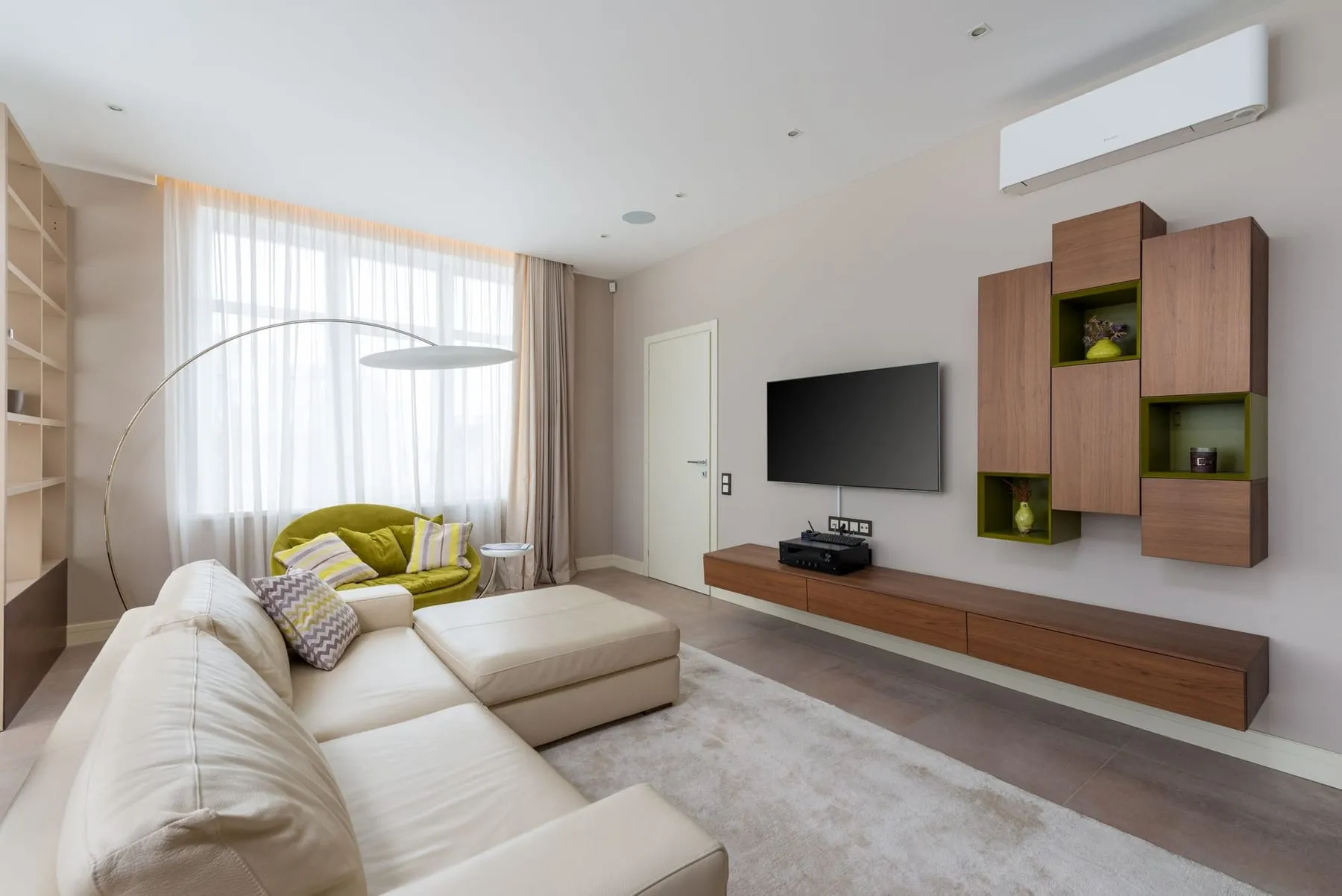
A 12,000 BTU mini split comfortably handles a 450 to 550 sq ft room with 8 ft ceilings, which makes it right for most living rooms, large bedrooms and one-car garages. It's the most common size sold, so every brand makes one and prices are keenest here.
- If two of these apply (over 550 sq ft, 10 ft ceiling, open kitchen, west windows), step up to 18,000.
- Only pre-charged kits like MRCOOL DIY and Klimaire DIY are true DIY; everything else needs an EPA 608 installer.
- Expect a dedicated 208/230 V circuit, usually on a 15 or 20 amp breaker.
On this page
Between two sizes? Compare the neighbors.
If mini splits had a default size, this would be it. A 12,000 BTU unit, also sold as one ton, is the one every manufacturer builds first, the one with the most listings at any retailer, and the one most likely to be on sale. That’s no accident: 450 to 550 square feet describes an enormous number of American living rooms, primary bedrooms, finished basements and one-car garages.
Before you buy one, check that your room sits in that band. The size calculator takes thirty seconds and prints the assumptions it used. If it says 12,000, carry on. If it says 9,000 or 18,000, those pages are one click away, and the systems are mostly the same lines in a different capacity.
The rooms a 12,000 BTU unit is right for
With 8 ft ceilings, average insulation and mixed sun, 12,000 BTU covers roughly 450 to 550 square feet. In practice that means:
- A living room of about 20 × 24 ft, with or without an adjoining dining area that stays open to it.
- A primary bedroom suite of 18 × 25 ft or so, including a walk-in closet that shares the air.
- A one-car garage or workshop (typically 12 × 22 to 14 × 24 ft) once you add the 15 percent garage allowance for door and slab losses. The garage guide has the insulation caveats.
- A finished basement room up to about 650 sq ft, because earth-cooled walls carry part of the load and a smaller unit dehumidifies better.
- A studio apartment or in-law unit of 400 to 500 sq ft where the kitchen is small and the bathroom door stays closed.
Watch the edges. A 500 sq ft room with a 10 ft ceiling is a 12,000 BTU room on paper and an 18,000 BTU room in July. A 500 sq ft room that faces north under a big oak is a 9,000 BTU room, and it’ll be happier, quieter and drier on the smaller unit.
12,000 vs 9,000: when smaller is better
The 9,000 BTU size is the right call more often than people expect. If your room is under 400 sq ft, or it’s a bedroom where you care about noise at 2 a.m., the smaller unit runs longer at a lower fan speed, pulls more humidity out, and cycles less. Inverter units modulate, but every unit has a minimum output. A 12,000 BTU unit’s minimum can be more than a small bedroom needs on a mild night, and that’s when you notice the on-off-on.
12,000 vs 18,000: when to go up
Go up a size when any two of these are true: the room is over 550 sq ft, the ceiling is 10 ft or vaulted, the room opens onto a kitchen, the big windows face west or south, the house is older with little insulation, or you’re in a hot-humid climate. One of them alone is usually absorbed by the 5 percent grace built into the sizing and the headroom in an inverter compressor. With two or more, you’re asking a 12,000 BTU unit to work at its ceiling every afternoon.
If the “room” is two rooms with a door between them, neither size is the answer. You want two heads; see the 2-zone guide.
12,000 BTU systems worth your shortlist
12,000 BTU shortlistOur pick for: a homeowner who wants to install it themselves this weekend
MRCOOLDIY 5th Gen (single zone)
Check priceat Amazon- Sizes sold
- 9,00012,00018,00024,00036,000
- Install
- DIY, pre-charged
- Heating
- Heats to −13°F (maker figure)
- Zones
- Single room
Read our MRCOOL reviewListing checked November 20, 2026Our pick for: a cheaper pre-charged DIY alternative to MRCOOL
KlimaireDIY 5th Gen (E-Z Kuick Connect)
Check priceat Amazon- Sizes sold
- 9,00012,00018,00024,00036,000
- Install
- DIY, pre-charged
- Heating
- Heats to −13°F on 9k–24k (maker figure)
- Zones
- Single room
Klimaire: review comingListing checked November 20, 2026Our pick for: cold-climate heating without a premium-brand price
SenvilleAURA (cold climate)
Check priceat Amazon- Sizes sold
- 9,00012,00018,00024,00036,000
- Install
- Pro install
- Heating
- −22°F rated heating
- Zones
- Single room
Read our Senville reviewListing checked November 20, 2026Our pick for: the lowest entry price on a 12,000 to 24,000 BTU single zone
DELLAVistara / Innova
Check priceat Amazon- Sizes sold
- 9,00012,00018,00024,00036,000
- Install
- Pro install
- Heating
- Standard heat pump
- Zones
- Single room
Read our DELLA reviewListing checked November 20, 2026Our pick for: bedrooms and living rooms in cold climates where quiet matters
Mitsubishi ElectricMSZ-FS Hyper-Heat (H2i)
How to buySold through a local dealer- Sizes sold
- 6,0009,00012,00015,00018,000
- Install
- Pro install
- Heating
- −13°F rated heating; newer H2i models run to −22°F
- Zones
- Single room
Read our Mitsubishi Electric reviewListing checked November 20, 2026
Prices change every week, so we link to the seller instead of printing a number that goes stale. Some of these links pay us a commission; that doesn’t change the order. We’re still checking each row against the spec sheet line by line; cold-climate ratings are the makers’ published figures.
Where one 12,000 BTU system beats another
Because every brand makes a 12,000 BTU unit, the differences come down to four things.
Install route. This is the size most people consider installing themselves, and it’s a reasonable size for it: the indoor head weighs about 25 lb and the outdoor unit 60 to 80 lb. Pre-charged kits from MRCOOL and Klimaire ship with refrigerant already in the line set and quick-connect fittings, which is what makes them genuinely DIY. Everything else on the list needs the line set evacuated with a vacuum pump, and under federal law an EPA 608 card to open the circuit, so budget for an installer. The DIY guide draws that line system by system.
Cold-climate rating. A standard unit heats fine to about 20°F. If you’ll lean on it in January, pay for a cold-climate model; the Senville AURA and Mitsubishi Hyper-Heat lines above hold rated output well below zero. The difference in price is smaller than the difference in February.
Minimum output. Buried in the spec sheet is the unit’s minimum capacity, the lowest it can throttle to. Lower is better for a room that’s often only slightly warm, and premium brands tend to win here.
Warranty terms. Some warranties are void without a licensed install. Some require online registration within 60 days. Read that page before the checkout page.
Electrical and placement notes for a 12,000 BTU install
- Most 12,000 BTU units specify a dedicated 208/230 V circuit on a 15 or 20 amp breaker. The nameplate lists the minimum circuit ampacity and maximum fuse size; the electrician sizes from those, not from a forum post. Our wiring guide covers the disconnect and whip.
- Standard line sets are 16 or 25 ft. Measure the run from head to condenser, including the vertical drop. Most units allow you to coil 10 ft of extra line behind the condenser, but not past the manufacturer’s limit.
- Mount the head high on an exterior wall if you can; it shortens the line set and lets the condensate drain by gravity. If the drain can’t fall, add a condensate pump to the budget.
- Put the outdoor unit on a wall bracket or a pad, at least 12 inches off the ground in snow country, with the clearances the manual asks for (usually 12 inches at the back and 24 at the front).
Before you order the 12,000
For a room in the 450 to 550 sq ft band, a 12,000 BTU unit from any of the brands above will do the job; the install quality matters more than the badge. Choose by route first (DIY kit or pro install), climate second, and price last. Then read the installation cost guide so the total doesn’t surprise you.
Questions people ask
How many square feet does a 12,000 BTU mini split cool?
About 450 to 550 square feet with 8 ft ceilings, average insulation and mixed sun. In a shaded, well-insulated room it stretches to 600 sq ft; in a sunny room with 10 ft ceilings it's closer to 400.
Is 12,000 BTU the same as 1 ton?
Yes. One ton of cooling is 12,000 BTU per hour, a unit left over from the days of melting literal ice. Listings use both terms for the same size.
How many amps does a 12,000 BTU mini split use?
Most 12,000 BTU units draw 5 to 10 amps running and are specified for a 15 or 20 amp dedicated 208/230 V circuit. Check the nameplate minimum circuit ampacity (MCA) on the specific unit; that's the number the electrician sizes the breaker from.
Can a 12,000 BTU mini split heat a room in winter?
A standard 12,000 BTU heat pump heats well to about 20°F and keeps going, with less output, into the teens. A cold-climate model such as a Senville AURA or Mitsubishi Hyper-Heat holds rated heating output to −13°F or below. If winter heating is the main job, buy the cold-climate version.
Should I get 12,000 or 18,000 BTU?
Run the calculator with your ceiling height and sun. For a normal room under 550 sq ft, 12,000. Go to 18,000 if the room is open to a kitchen, has a vaulted ceiling, or bakes in west sun, or if it's really two rooms.
Reader-supported. If you buy through a link on this page we may earn a commission, at no cost to you. How that works.