Mini split error codes: what DF means, and how to read the rest
What does DF mean on a mini split? Defrost, and it's normal. How to read the other code families (E, F, P, U, CH), reset safely, and when to call a tech.
The short answer
DF on a mini split display means defrost: the outdoor coil is melting frost in heating mode, and the unit will resume in a few minutes. Real error codes are letters plus numbers; the exact table is in your unit's manual, and refrigerant or compressor codes mean call a tech.
- Write the exact code down, including the letter or the flash count, before you reset anything.
- Cut power at the breaker for five minutes, once. If the code comes back, the fault is real.
- Pressure, refrigerant, inverter or compressor codes that return after one reset are a licensed tech's job.
On this page
The most searched mini split “error” isn’t an error. If you’re asking what DF means on a mini split, it’s defrost. Your heat pump is in heating mode, the outdoor coil has frosted over in cold damp air, and the unit has reversed itself briefly to melt that frost. Indoor heat pauses for several minutes and the display shows DF while it happens. It’ll resume by itself. Nothing is wrong.
The letter-and-number codes are a different matter. Every brand uses its own table, and even within a brand the table varies by series, so the only authoritative list is the one for your exact model. We can’t replace your manual. What we can give you is the families most codes fall into, the safe reset, and the codes that mean stop and call. The maintenance hub covers the upkeep that prevents most of them.
DF, defrost, and why your heat stops for five minutes
A heat pump heating your house pulls heat out of cold outdoor air, so its outdoor coil runs colder than the air around it. Below about 40°F in humid weather, moisture freezes on that coil. Left alone, the ice would block airflow and the unit would stop heating, so the control board periodically runs a defrost cycle. It reverses the refrigerant flow (briefly running as an air conditioner outdoors), melts the frost, and switches back. During defrost the indoor fan slows or stops so it doesn’t blow cold air at you, the display often shows DF or a defrost icon, and you may hear a whoosh and see steam rise off the outdoor unit. Five to ten minutes later, normal heating resumes.
The cold climate mini split guide explains why units rated for deep cold handle this better. Two defrost patterns deserve a second look. If the unit seems to defrost constantly, every twenty minutes all day, the outdoor coil may be dirty, the airflow blocked, or a sensor drifting. If the outdoor unit is encased in ice that defrost never clears, the base pan drain may be frozen or blocked, which stops the meltwater leaving. Both start with a look outside and, if that doesn’t explain it, a tech.
How your unit shows a code
It depends on the brand and the head.
On the display. Many heads with a temperature readout show a code in its place: a letter followed by one or two digits, such as E1, F2, P4, or on LG units a CH prefix and two digits. The code may alternate with the temperature.
By blinking lamps. Heads without a numeric display, including many Mitsubishi and Fujitsu models, flash the operation lamp, the timer lamp or both in a pattern. The number of flashes, and which lamp, maps to a code in the manual. Count carefully, because five flashes and a pause is a different fault from six.
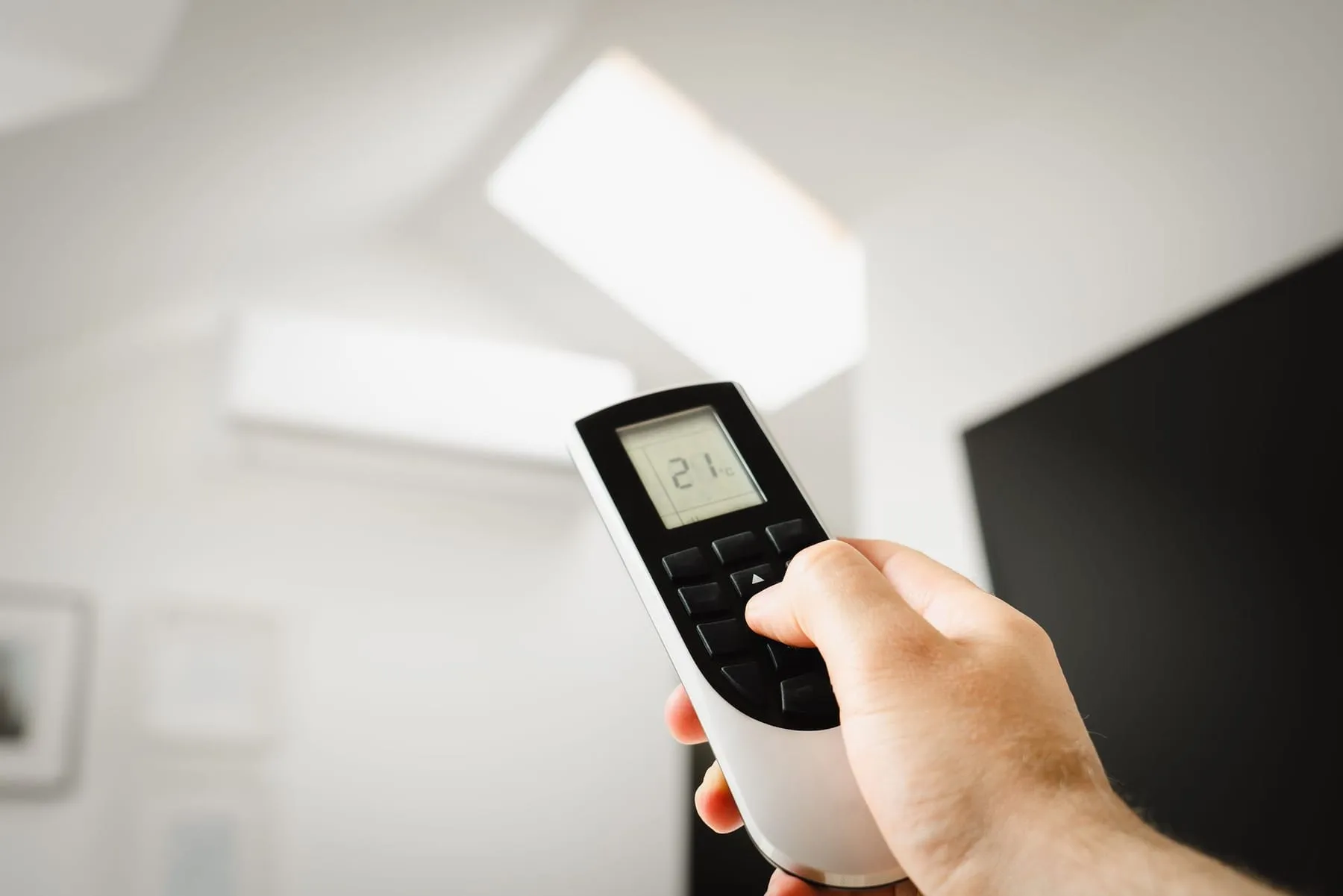
Through the remote. Some brands let you pull a stored code by holding a button on the remote or stepping through a self-diagnosis mode. Daikin and Mitsubishi remotes, among others, have this, and the manual describes it.
However yours talks, write the code down exactly, letter included, before you reset anything. A tech who hears “it said P4” can bring the right part. One who hears “it was blinking” can’t.
Mini split error codes by family
The letters differ by brand, so read these as the kinds of fault that exist, not as a key to your unit.
- Communication faults between the indoor head and the outdoor unit. Often a loose or damaged signal wire, a board, or in a new install a wiring mistake. Common after storms.
- Sensor faults. A temperature sensor on the indoor coil, the room air, the outdoor coil or the compressor discharge line has failed, come unplugged or drifted. Cheap parts; the unit may still run badly or refuse to run.
- Protection shutdowns. High pressure, low pressure, high discharge temperature, over-current. The unit stops to protect the compressor. The cause can be as simple as a blocked outdoor coil or as serious as low refrigerant.
- Inverter or module faults. The outdoor board that drives the compressor has detected a problem with itself or the compressor. Usually a tech.
- Fan faults. The indoor or outdoor fan isn’t turning at the speed the board expects. Motor, capacitor or an obstruction.
- Drain or float faults. On heads with a condensate pump or a float switch, the pan is full and the unit has stopped making water. Clear the drain first.
- Status codes that aren’t faults. Defrost (DF or an icon), pre-heat, oil return, filter reminders (often FC or CL on some brands), and timer indicators. The manual lists these separately from faults.
Resetting it once, safely
Switch the unit off at the remote. Then switch it off at the breaker or the outdoor disconnect and wait five minutes, which lets pressures equalize and the boards fully restart. Turn it back on and run it in the mode that produced the code. If the code doesn’t return, it was a passing protection trip (a hot afternoon with a dirty outdoor coil, a brief voltage dip). Go back to your day, and make a note to clean the outdoor unit. If the code returns, the fault is real, and resetting again only postpones the call. One reset is diagnosis; three is denial.
Call a licensed tech when
- Any protection, pressure, discharge temperature or refrigerant-related code returns after one reset. The cause may be low charge, which means a leak, and opening the refrigerant circuit requires an EPA 608 certification.
- Any inverter, module or compressor code. These aren’t owner-serviceable and the parts aren’t cheap; the repair guide explains what that visit involves.
- A communication code after you’ve checked that nothing has physically disturbed the wiring. Do not open the outdoor unit’s electrical cover. It’s line voltage.
- A code with a tripped breaker, a burning smell or scorch marks. Cut power at the breaker and leave it off.
- A fan code with the outdoor fan not turning while the compressor hums.
Before calling about any of those, you can safely check that the filters are clean, the outdoor unit is clear and the drain runs. A dirty coil or a full pan can trigger protection and drain codes without anything being broken. The not cooling guide walks through those checks in order.
Finding the table for your model
Look in the owner’s manual (troubleshooting or self-diagnosis section), the installation manual (which usually has the fuller list), the manufacturer’s support page for your model number, and often a sticker inside the indoor front panel or under the outdoor unit’s top cover. The model number is on the nameplate on the right side of the indoor head and on the outdoor cabinet. Our brand reviews link each maker’s support site, and the Mitsubishi review points to where that brand’s blink-code tables live. If you’re still choosing a system and want fewer codes in your life, size it right first: the size calculator catches oversizing, and with it the short-cycling that sets off protection trips.
The code came back: what to do now
If it was DF, wait; your heat will be back in a few minutes. For anything else that survived a five-minute breaker reset, look the code up in your own manual, not a general list. If it falls in the pressure, refrigerant, inverter or compressor families, stop and call a licensed tech with the code in hand. The repair guide covers what that visit involves and what to ask before you book it.
Questions people ask
What does DF mean on a mini split?
Defrost. In heating mode the outdoor coil frosts over in cold, damp air, and the unit periodically reverses to melt it, pausing indoor heat and often showing DF (or dF) for several minutes. Many brands use the same code, including Pioneer, Bosch and MRCOOL. It's normal operation, not an error. Defrost that runs constantly or leaves the outdoor unit encased in ice is worth a look.
How do I reset a mini split error code?
Switch the unit off at the remote, then off at the breaker or disconnect for five minutes, then back on. Many protection shutdowns clear this way. If the same code returns, the fault is real and resetting again only delays the repair; note the code and call a tech with it.
Why is my mini split light blinking?
On many heads, a blinking operation or timer lamp is the error code, with the number of flashes or the pattern standing for a code you look up in the manual. Mitsubishi and Fujitsu heads in particular signal faults this way. Count the flashes, note which lamp, and power cycle once before calling.
What are the most common mini split error codes?
Across brands the usual families are indoor and outdoor communication faults, a failed or open temperature sensor, high or low pressure protection, high discharge temperature, and inverter module faults. The letter and number differ by brand, which is why the exact table is in your manual rather than on any general page.
Where do I find the error code list for my mini split?
In the owner's or installation manual under troubleshooting or self-diagnosis, on the manufacturer's support page for your model, and often on a sticker inside the indoor front panel or the outdoor unit's cover. Our brand reviews link each maker's support site.