Mini split for garage: size it, insulate it, pick the kit
A mini split for a garage needs about 15 percent more capacity than the same floor area indoors, and insulation matters more than brand. The size by garage type, the DIY kits, and the install notes.
The short answer
A one-car garage is a 9,000 BTU mini split if it's insulated and a 12,000 if it isn't. A two-car garage lands on 12,000 to 18,000 BTU, most often 18,000, and a three-car garage on 24,000. Add the 15 percent garage allowance, weather-strip the big door first, and pick a pre-charged DIY kit if you want to install it yourself.
- A 22 × 22 ft two-car garage lands on 18,000 BTU whether it's insulated or not.
- Weather-strip and insulate the door before buying; it costs less than moving up a size.
- Most garages need a new 208/230 V circuit, usually the biggest cost after the unit itself.
On this page
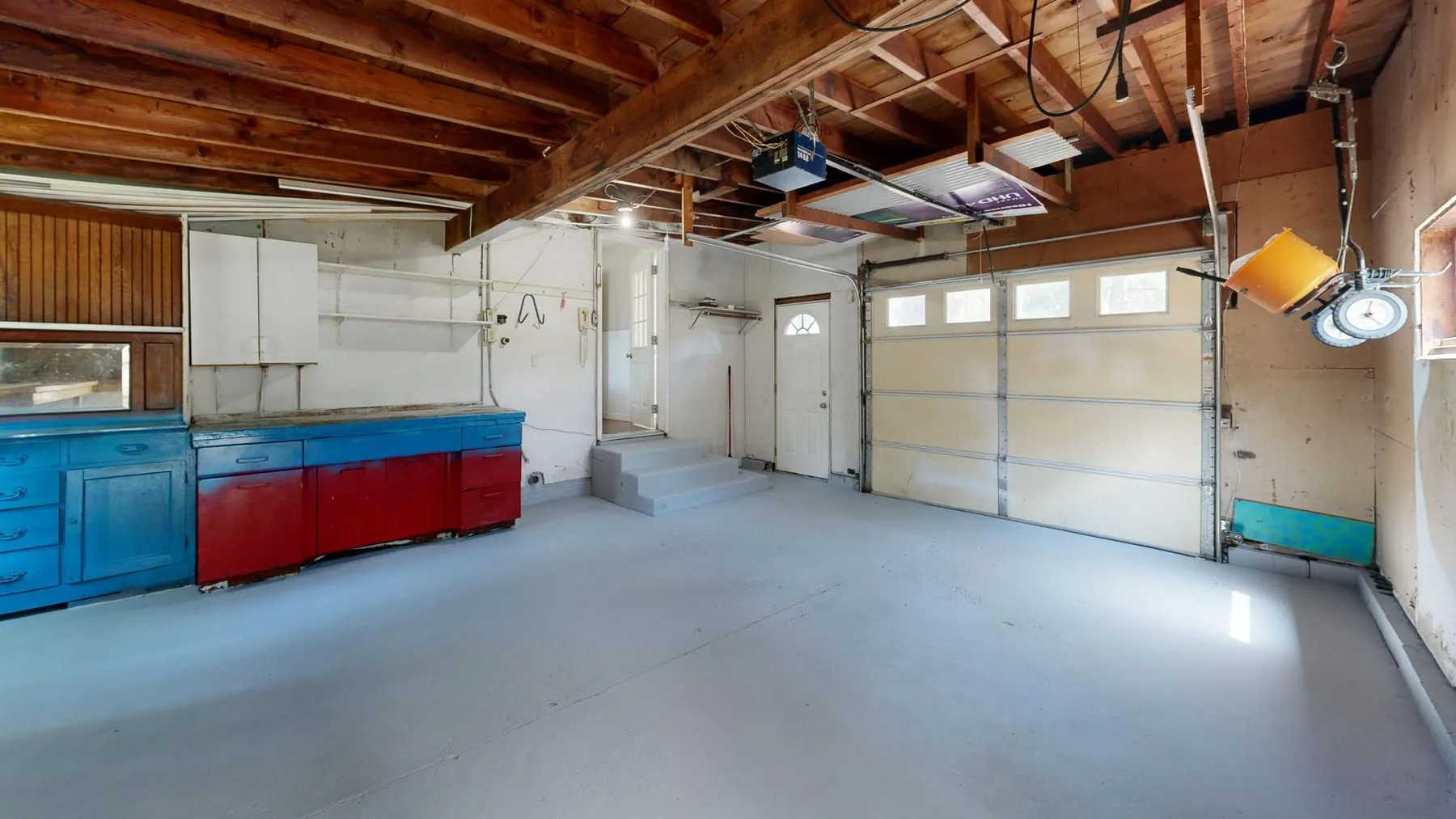
A garage is the easiest room in the house to put a mini split in and the easiest to size wrong. Easy, because there’s an exterior wall, a short line set, nothing to hide, and a space no one minds drilling into, which is why pre-charged DIY kits make the most sense here. Wrong, because the number on the floor plan isn’t the number that matters. A garage leaks air around a door the size of a wall, sits on a slab that pulls heat in summer and out in winter, and is usually insulated badly or not at all.
Our room-by-room method adds 15 percent to a garage’s load for the door and the slab, and another 20 percent if the insulation is poor, which in most garages it is. Together they turn a two-car garage that would be a 12,000 BTU living room into an 18,000 BTU shop, and in a cold climate a 24,000. The calculator has a garage setting that applies all of this; the table below shows the result for common garage sizes.
What size mini split for a garage
With 8 ft ceilings and mixed sun, in a mild climate:
| Garage | Floor area | Insulated (walls and door) | Uninsulated |
|---|---|---|---|
| One-car, 12 × 22 ft | 264 sq ft | 8,050 → 9,000 BTU | 9,660 → 12,000 BTU |
| One-car, 14 × 24 ft | 336 sq ft | 9,200 → 9,000 BTU | 11,040 → 12,000 BTU |
| Two-car, 20 × 20 ft | 400 sq ft | 10,350 → 12,000 BTU | 12,420 → 12,000 BTU |
| Two-car, 22 × 22 ft | 484 sq ft | 13,800 → 18,000 BTU | 16,560 → 18,000 BTU |
| Two-car deep, 24 × 24 ft | 576 sq ft | 16,100 → 18,000 BTU | 19,320 → 24,000 BTU |
| Three-car, 32 × 24 ft | 768 sq ft | 20,700 → 24,000 BTU | 24,840 → 24,000 BTU |
The first number in each cell is the adjusted load; the bold is the unit it rounds to, with the 5 percent grace the method allows. Look at the 20 × 20 two-car garage: it stays on a 12,000 even uninsulated, because 12,420 is inside the grace. The 22 × 22, only two feet bigger each way, is an 18,000 either way. The deep two-car garage is where insulation changes the answer by a full size.
Garages commonly need two more adjustments. Many have 9 or 10 ft ceilings, which add 13 or 25 percent; a 22 × 22 garage with a 10 ft ceiling and no insulation is 20,700 and lands on a 24,000. And in a cold climate, where the unit is the winter heat, the method adds 20 percent. That same insulated 22 × 22 garage becomes 16,560 and stays on 18,000, while the uninsulated one becomes 19,872 and goes to 24,000.
Most garages land on one of two sizes, and the 12,000 BTU page and the 18,000 BTU page list the systems in each, plus the neighbors either side.
Insulate the door before you buy the compressor
If you take one thing from the sizing method’s garage note, take this: if the door is uninsulated, weather-strip it first, because that’s cheaper than a bigger compressor.
A garage door is a wall-sized panel of thin metal or wood with gaps on four sides. In summer it radiates heat into the space all afternoon; in winter it’s where most of the heat leaves. Do these jobs in order of return. Replace the bottom seal and the side and top weather-stripping so the door closes on rubber, not daylight. Insulate the door panels, either with a kit of rigid foam cut to each panel or by buying an insulated door when the old one is due. Then seal the gaps where the walls meet the slab and the ceiling. If the garage has an attic above it, insulate that ceiling next; an uninsulated garage ceiling under a hot attic is a radiator.
None of that is glamorous. All of it costs less than moving from an 18,000 to a 24,000 BTU unit, and it makes whichever unit you buy run less, cycle less and keep the garage steadier.
Heating a garage in winter
Every unit on this page is a heat pump, and heating is often why people put one in a garage: the workshop you can use in February, the gym that isn’t 35°F at 6 a.m. These notes come from manufacturers’ manuals and owner reports.
A standard mini split heats well to about 20°F and keeps going with less output into the teens. In the northern half of the country, where the garage will be the coldest room in January, buy a cold-climate line: the Senville AURA, sold in every size on the table above, holds rated heating to −22°F. The sizing method adds 20 percent in a cold climate for exactly this reason, because there the heating load, not cooling, decides the size.
The slab stays cold. A mini split heats air, and a concrete floor that has been losing heat to the ground all night will feel cold underfoot however warm the air is at head height. Rubber mats where you stand help more than another thousand BTU.
Setbacks work differently in a garage. Letting a workshop fall to 45°F overnight and warming it to 65°F when you walk in is a reasonable way to run it, but recovery takes a while and the unit will run flat out to do it. If you want the garage warm at 7 a.m., schedule it for 5.
The dust and fumes question
A mini split recirculates the room’s air through a filter and a coil. In a woodshop that filter clogs in weeks, not seasons. Clean it monthly, keep the head as far from the saw and the dust collector’s exhaust as the wall allows, and read our cleaning guide before the first season. Fine dust on the coil is what kills efficiency.
A mini split doesn’t ventilate. It does nothing about car exhaust, paint fumes or welding smoke, and running an engine in a closed garage is dangerous whether or not there’s a mini split on the wall. Treat it as climate control and keep the door open for anything that smells.
Systems worth your shortlist
Our pick for: a homeowner who wants to install it themselves this weekend
MRCOOLDIY 5th Gen (single zone)
Check priceat Amazon- Sizes sold
- 9,00012,00018,00024,00036,000
- Install
- DIY, pre-charged
- Heating
- Heats to −13°F (maker figure)
- Zones
- Single room
Read our MRCOOL reviewListing checked November 20, 2026Our pick for: a cheaper pre-charged DIY alternative to MRCOOL
KlimaireDIY 5th Gen (E-Z Kuick Connect)
Check priceat Amazon- Sizes sold
- 9,00012,00018,00024,00036,000
- Install
- DIY, pre-charged
- Heating
- Heats to −13°F on 9k–24k (maker figure)
- Zones
- Single room
Klimaire: review comingListing checked November 20, 2026Our pick for: garages, workshops and rentals on a budget
SenvilleLETO
Check priceat Amazon- Sizes sold
- 9,00012,00018,00024,00036,000
- Install
- Pro install
- Heating
- Standard heat pump
- Zones
- Single room
Read our Senville reviewListing checked November 20, 2026Our pick for: the lowest entry price on a 12,000 to 24,000 BTU single zone
DELLAVistara / Innova
Check priceat Amazon- Sizes sold
- 9,00012,00018,00024,00036,000
- Install
- Pro install
- Heating
- Standard heat pump
- Zones
- Single room
Read our DELLA reviewListing checked November 20, 2026
Prices change every week, so we link to the seller instead of printing a number that goes stale. Some of these links pay us a commission; that doesn’t change the order. We’re still checking each row against the spec sheet line by line; cold-climate ratings are the makers’ published figures.
Choosing the garage unit
Install route. The garage is where the pre-charged kit earns its reputation. MRCOOL’s DIY 5th Gen and Klimaire’s DIY lines ship with refrigerant already in the line set and quick-connect fittings, so the job is mounting the bracket, drilling one hole, hanging the head, setting the condenser and connecting the lines, with no vacuum pump and no refrigerant handling. The garage makes it easier still: the head goes on an exterior wall, the line set is short, and no one cares about the cover. The Senville LETO and DELLA Vistara in the table are the value pro-install options; their line sets are evacuated on site, which needs an EPA 608 certified technician. The DIY hub draws that line system by system.
Cold-climate rating, if the garage is in the north and heating is the point. As above, the Senville AURA is the cold-climate sibling of the LETO in the table, sold in every size a garage needs.
Head placement. Not above the door track, where the door’s travel and the dirtiest air in the room will reach it. Put it on the wall opposite or beside the door, high, so the cold air falls across the space and the return pulls from head height rather than floor level. Keep it away from the dust source.
A washable filter and an easy-off cover, because you’ll clean it more often than a living room unit.
Warranty terms. Some are void without a licensed install. Read that page before the checkout page.
Electrical and placement notes for a garage install
- Most garages have a 120 V circuit for the opener and the lights and nothing else. Mini splits of 12,000 BTU and up are 208/230 V on a dedicated circuit, typically 15 to 25 amps for the sizes on this page; the nameplate’s minimum circuit ampacity and maximum fuse size decide. That means a new circuit from the panel or a subpanel, which needs an electrician or a permit in most jurisdictions. Our wiring guide covers the disconnect and whip.
- The condenser goes outside the garage wall, on a pad or a wall bracket. A bracket keeps it above snow, out of the mower’s way, and off a driveway where it could get hit; make sure the bracket is rated for the unit’s weight, and keep the manual’s clearances.
- Condensate can drain straight through the wall by gravity if the head is on an exterior wall. In a cold climate, make sure the drain line’s outside end can’t freeze shut; a frozen drain backs up into the head.
- Stock line sets of 16 or 25 ft are almost always enough in a garage. Coil any excess behind the condenser within the manufacturer’s limits; you can’t cut a pre-charged line set.
- A ladder on a tall garage wall is fine; a ladder on a second-story wall above a garage is a pro job.
What we’d put in a two-car garage
Size the garage from the table, not the floor plan: most two-car garages take an 18,000 BTU unit and most one-car garages a 9,000 or 12,000. Spend the first weekend on the door seals and the insulation, because they change the answer by a size and make any unit run less. Then, if you want to install it yourself, pick a pre-charged kit; no room suits that route better. The installation cost guide shows what the electrical work adds, which in a garage is usually the biggest line item after the unit.
Questions people ask
What size mini split do I need for a 2 car garage?
Usually 18,000 BTU. A 22 × 22 ft garage is 484 sq ft, a 12,000 BTU load indoors; the 15 percent garage allowance for door and slab losses takes it to 13,800, which rounds up to 18,000. A smaller 20 × 20 ft garage stays on 12,000 even uninsulated. A deep 24 × 24 with no insulation goes to 24,000.
Can a mini split heat a garage in winter?
Yes; every unit on this page is a heat pump. A standard unit heats well to about 20°F and tapers below that. In a northern state buy a cold-climate line, which holds rated heating far below zero, and expect the slab to stay cold underfoot however warm the air gets. Insulating the door matters more for heating than for cooling.
Should I insulate the garage before installing a mini split?
Yes, at least the door. An uninsulated garage adds 20 percent to the load on top of the 15 percent garage allowance, and that's often the difference between a 12,000 and an 18,000 BTU unit. Weather-stripping the door, insulating its panels and sealing the gaps costs a fraction of the next size up and makes whichever unit you buy run less.
Can I install a garage mini split myself?
With a pre-charged kit, yes, and a garage is the friendliest place to do it: an exterior wall, a short line set, nothing to hide. MRCOOL DIY and Klimaire DIY kits ship with refrigerant already in the line set. The 208/230 V circuit still needs an electrician or a permit in most jurisdictions, and under federal law other brands need an EPA 608 certified technician to charge the system.
Will sawdust or car exhaust hurt a garage mini split?
Dust will clog the filters fast in a woodshop, so clean them monthly instead of seasonally and keep the head away from the dust collector's outlet. Exhaust is a different matter: a mini split recirculates indoor air and doesn't ventilate, so it does nothing about fumes. Run engines with the door open, as you would anyway.
Reader-supported. If you buy through a link on this page we may earn a commission, at no cost to you. How that works.