Mini split for sunroom: size for the glass, then pick the right unit
A mini split for a sunroom needs about 20 percent more capacity than a normal room of the same size, plus the sun adjustment. Size by sunroom type, the three-season question, and the picks.
The short answer
A sunroom of 200 to 400 sq ft usually lands on a 9,000 or 12,000 BTU mini split, one size above the same floor area indoors, once the 20 percent glass allowance and the 10 percent for strong sun are added. A three-season room with single-pane glass goes up another size and will still struggle in a northern January.
- Shading the west glass with blinds, shades or a pergola cuts the load more than any unit spec.
- A sloped ceiling averaging 10 ft adds 25%, which moves nearly every sunroom up a size.
- If year-round use is the goal, put the money into the glass before the mini split.
On this page
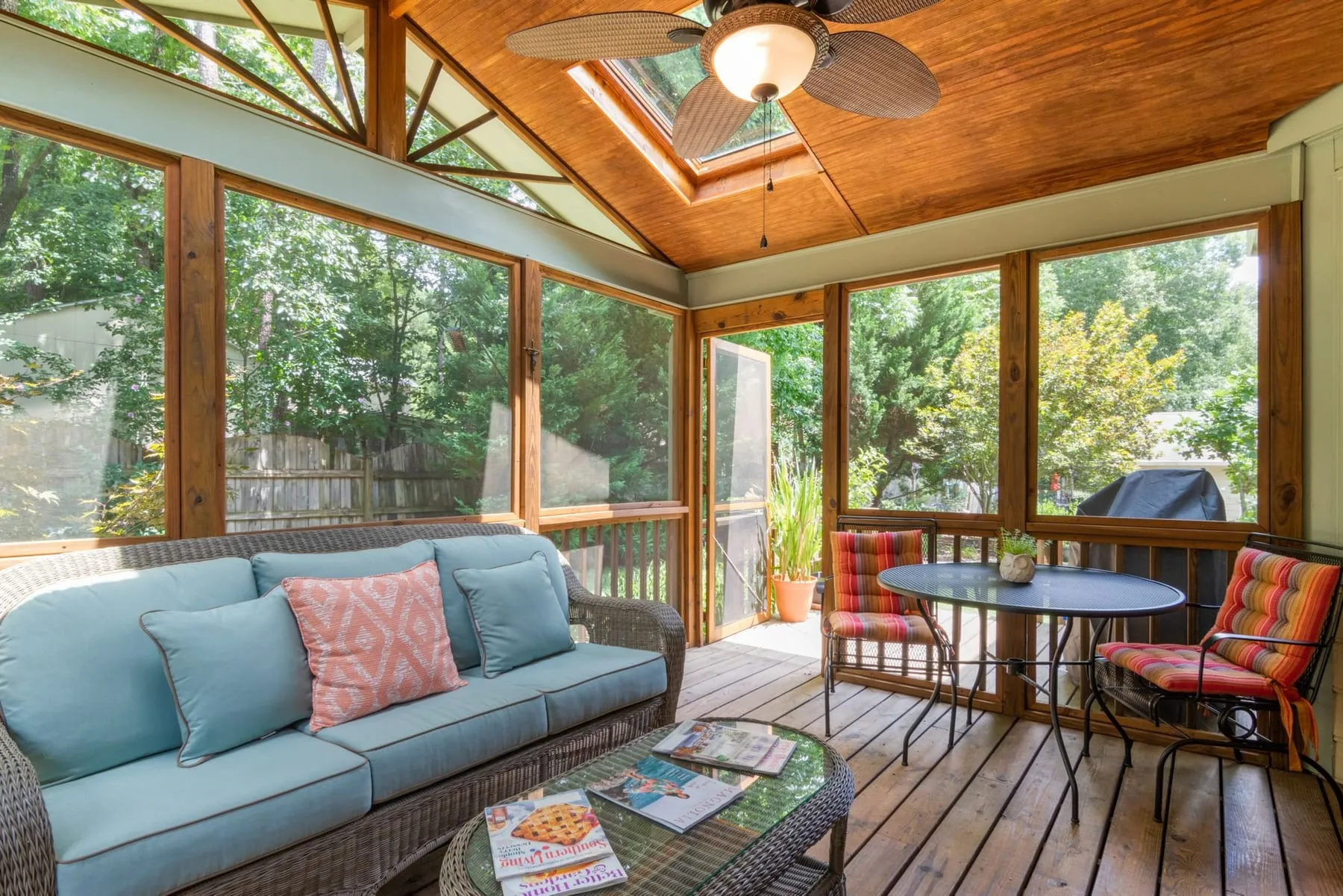
Of all the rooms we cover, the sunroom is the hardest to size, because the thing that makes it a sunroom, glass, is the thing that makes it hard to condition. Glass gains heat all afternoon in July and loses it all night in January, far faster than a wall of the same area. So the same 300 sq ft that’s a 9,000 BTU bedroom is a 9,000 BTU sunroom only if the glass is insulated and the room is shaded. Otherwise it’s a 12,000.
Our room-by-room method adds 20 percent for a sunroom’s glass before anything else. Then it stacks the sun factor (another 10 percent, and almost every sunroom qualifies) and, for a three-season room with single-pane glass, the poor-insulation factor (another 20). The calculator has a sunroom setting that applies all of this. Below, the table shows where common rooms land; after that comes the question no number answers, which is what a mini split can and can’t do for a sunroom in winter.
What size mini split for a sunroom
With 8 ft ceilings, strong afternoon sun, in a mild climate:
| Sunroom | Floor area | Insulated glass and walls | Single-pane, uninsulated |
|---|---|---|---|
| 12 × 16 ft | 192 sq ft | 7,920 → 9,000 BTU | 9,504 → 12,000 BTU |
| 14 × 18 ft | 252 sq ft | 9,240 → 9,000 BTU | 11,088 → 12,000 BTU |
| 16 × 20 ft | 320 sq ft | 10,560 → 12,000 BTU | 12,672 → 18,000 BTU |
| 20 × 20 ft | 400 sq ft | 11,880 → 12,000 BTU | 14,256 → 18,000 BTU |
The first number in each cell is the adjusted load; the bold is the unit it rounds to. There’s very little margin. The 14 × 18 insulated room sits on a 9,000 with the 5 percent grace almost used up, and the 16 × 20 single-pane room clears the 12,000’s grace by seventy BTU and goes to an 18,000. Sunrooms live on the boundaries, so the tie-breakers matter more here than in any other room.
In a cold climate, where the unit is the winter heat, the method adds another 20 percent: the 16 × 20 insulated room becomes 12,672 and goes to 18,000, and the single-pane version becomes 15,206 and stays there. Most sunrooms land on one of two sizes, and the 9,000 BTU and 12,000 BTU pages list the systems.
Three-season or four-season
Settle this before you think about brands.
A four-season sunroom has insulated glass, an insulated roof and walls, and a floor that isn’t a bare slab. It’s a room that happens to have a lot of windows, and a mini split sized from the table heats and cools it like any other room. In a northern state, pair it with a cold-climate unit; the Senville AURA in our picks holds rated heating to −22°F, and the sizing method’s cold-climate factor applies.
A three-season room has single-pane glass or acrylic panels, little or no insulation, and often a slab floor. In summer a mini split cools it, provided the glass has some shading and the unit is sized from the right-hand column of the table. In winter the glass loses heat faster than most units can put it back once the outdoor temperature drops into the twenties, and the head’s thermostat reads warm air near the unit while frost forms on the panes. A mini split makes a three-season room usable on mild winter days and in the shoulder seasons. It doesn’t make it a four-season room, and no spec on the wall unit changes what the glass does. If year-round use is the goal, the money goes into the glass first.
Sun, shade and orientation
The sun factor is 10 percent in the method, and in a sunroom it’s almost always on. What you do about it changes the load more than any choice of unit:
- Shading. Cellular blinds, exterior roller shades or a pergola over the west glass cut the afternoon gain substantially and let the unit run in its efficient middle range instead of flat out.
- Orientation. A north- or east-facing sunroom is a different room from a west-facing one. If the glass faces north and is shaded, drop the sun factor and the room may fall a size.
- Ceiling height. Many sunrooms have a sloped or vaulted ceiling. A 10 ft average height adds 25 percent, which on the table above moves nearly every row up a size.
Systems worth your shortlist
Our pick for: the best-known budget single zone; pro install or an experienced DIYer with a vacuum pump
PioneerDiamante Ultra
Check priceat Amazon- Sizes sold
- 9,00012,00018,00024,00036,000
- Install
- Pro install
- Heating
- Standard heat pump
- Zones
- Single room
Read our Pioneer reviewListing checked November 20, 2026Our pick for: cold-climate heating without a premium-brand price
SenvilleAURA (cold climate)
Check priceat Amazon- Sizes sold
- 9,00012,00018,00024,00036,000
- Install
- Pro install
- Heating
- −22°F rated heating
- Zones
- Single room
Read our Senville reviewListing checked November 20, 2026Our pick for: a homeowner who wants to install it themselves this weekend
MRCOOLDIY 5th Gen (single zone)
Check priceat Amazon- Sizes sold
- 9,00012,00018,00024,00036,000
- Install
- DIY, pre-charged
- Heating
- Heats to −13°F (maker figure)
- Zones
- Single room
Read our MRCOOL reviewListing checked November 20, 2026
Prices change every week, so we link to the seller instead of printing a number that goes stale. Some of these links pay us a commission; that doesn’t change the order. We’re still checking each row against the spec sheet line by line; cold-climate ratings are the makers’ published figures.
Choosing a unit for a glass room
Install route. The MRCOOL DIY 5th Gen in the table is the pre-charged kit, sold at 9,000, 12,000 and 18,000 BTU among others, with refrigerant already in the line set and quick-connect fittings; it covers every room size on the table. The Pioneer Diamante and Senville AURA ship conventional line sets that an EPA 608 certified technician evacuates and charges on site. A sunroom often has only one solid wall, shared with the house, so plan the line set route first; the DIY hub covers what’s yours to do.
Cold-climate rating, if the room will be used in winter in a northern state. The Senville AURA is the cold-climate line here. For any model, read the heating capacity at 5°F, not the nameplate.
Head placement. On the solid wall, high, throwing toward the glass. The cold air falls along the glass in summer and the warm air rises along it in winter, which is where the load is. If the solid wall is a short knee wall, a floor-mounted console unit or a ceiling cassette may be the only option; both are pro installs, and the ceiling cassette guide explains the trade.
Condensate. With the head on the house wall, the drain may have to run along that wall to the outside or through to a pump inside the house. Plan it before choosing the wall.
Warranty terms. Licensed-install requirements and registration windows vary by brand; read them first.
Fix the glass, then choose the unit
Size a sunroom for its glass, not its floor: one size up from the same area indoors, two sizes up for single-pane glass, and add the cold-climate factor if it’ll be used in winter up north. Then be honest about the room. A four-season sunroom with a cold-climate unit is comfortable all year; a three-season room with a mini split is comfortable for nine months and cold in January, whatever the unit’s badge says. The cold climate mini split guide covers what to read on a spec sheet before you buy for winter.
Questions people ask
What size mini split do I need for a sunroom?
Take the size the floor area suggests and add 20 percent for the glass and 10 percent for sun. A 14 × 18 ft sunroom (252 sq ft) is a 7,000 BTU base load, 9,240 adjusted, which stays on a 9,000; a 16 × 20 ft room (320 sq ft) is 10,560 and becomes a 12,000. Single-pane glass adds another 20 percent and moves most rooms up a size.
Can a mini split heat a sunroom in winter?
A four-season room with insulated glass and insulated walls, yes, with a cold-climate unit in the north. A three-season room with single-pane glass loses heat through the glass faster than most units can replace it below about 20°F; a mini split will make it usable on mild winter days, not in a January cold snap. Nothing on the wall changes what the glass does.
Will a mini split keep a sunroom cool in summer?
Yes, if it's sized for the glass and the sun rather than the floor area, and if the glass has some shading. Blinds, exterior shades or a tree on the west side cut the load by more than any single spec of the unit does. Without shading, a west-facing sunroom on a July afternoon is the hardest room in the house to cool.
Where do you mount a mini split in a room made of glass?
On the one solid wall, which is usually the wall shared with the house. A head there throws across the room toward the glass, and the line set runs back through the house wall or along it to the condenser. If there's no solid wall high enough for a wall head, a floor-mounted console unit or a ceiling cassette is the answer, and the install becomes a pro job.
Reader-supported. If you buy through a link on this page we may earn a commission, at no cost to you. How that works.