The smallest mini split you can buy, and when small is the right call
The smallest mini splits sold in the US are 6,000 BTU Mitsubishi wall units; most brands start at 9,000. Who needs a small unit, and which ones to shortlist.
The short answer
The smallest mini split in the lines we cover is a 6,000 BTU wall unit from Mitsubishi Electric, sized for rooms up to 250 sq ft. Every other brand starts at 9,000 BTU, which handles the same small rooms with a little more cycling. For a small room, minimum output matters more than nameplate size.
- For any room under 250 sq ft, compare minimum capacity on the spec sheet, not nameplate BTU.
- Most lines share one indoor chassis up to 12,000 BTU, so a smaller head is rarely a smaller box.
- Under about 100 sq ft, a good inverter window unit is often the better fit.
On this page
The smallest mini split you can buy, in the lines we cover, is a 6,000 BTU wall unit from Mitsubishi Electric. Everyone else starts at 9,000 BTU. That sounds like a small gap, and for a 300 sq ft room it is. For a 120 sq ft nursery it’s the difference between a unit that runs quietly all night and one that switches on and off every twenty minutes.
“Smallest” can mean several things, though, and nameplate capacity is only one of them. Some people need the smallest unit made; most just need a small one. Our sizing hub has the method behind the room sizes, and the calculator tells you whether your room is small enough for the distinction to matter.
Four ways to read “smallest”
Smallest capacity. 6,000 BTU, half a ton, sized for rooms up to about 250 sq ft. Only Mitsubishi sells it in our table, and our 6,000 BTU guide goes into why. The 9,000 BTU floor everyone else sets covers rooms of 250 to 400 sq ft and, with some cycling, the smaller ones too.
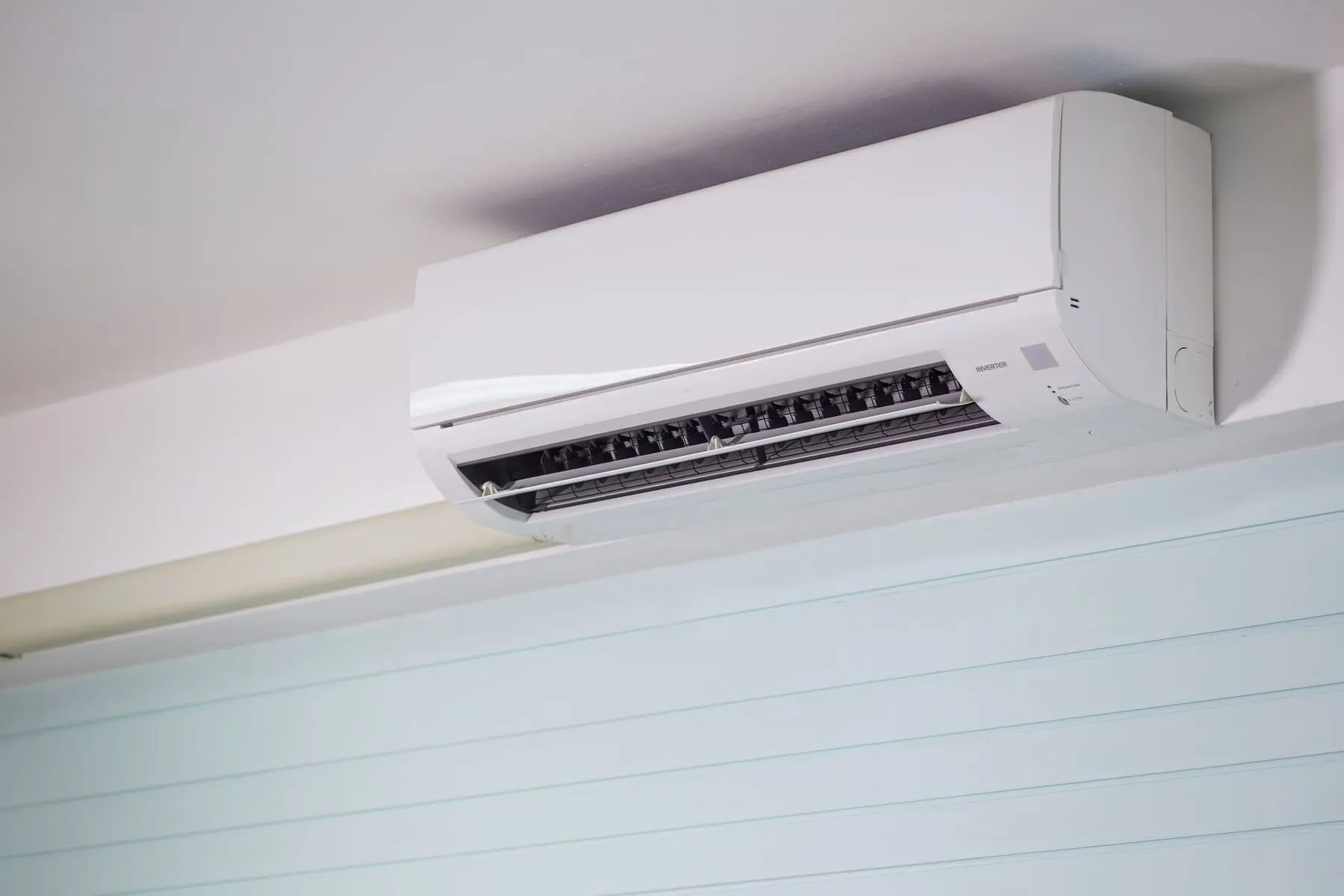
Smallest indoor unit. The news here is dull. Most lines use one indoor chassis from the bottom of the range up to 12,000 BTU, so the 6,000 or 9,000 is usually the same box as the 12,000. Compact wall heads exist, but the differences between brands at the same capacity come to a few inches. Read the dimensions on the spec sheet for the exact model rather than trusting a listing’s “slim” claim. If what bothers you is seeing the unit at all, the hidden mini split guide covers ducted and concealed options.
Smallest outdoor unit. This one does scale. A 6,000 or 9,000 BTU condenser is the lightest and most compact in any lineup, which matters for a wall bracket on a small house, a balcony, or a tight side yard.
Smallest minimum output. This is what decides comfort in a small room, and hardly anyone searches for it. An inverter unit varies its compressor speed down to a minimum, and below that it cycles. A unit with a low minimum capacity holds a small room steady; one with a high minimum behaves like a window unit. Look for minimum capacity on the spec sheet, and compare it across the two or three units you’re choosing between.
Who needs the smallest mini split
These are the rooms where 6,000 BTU is the right size, with 8 ft ceilings and average insulation:
- A nursery or child’s bedroom of 10 × 12 ft (120 sq ft), where quiet and steady matter more than anywhere else in the house.
- A bedroom of 12 × 14 ft (168 sq ft) or anything up to about 250 sq ft. The bedroom guide covers placement.
- A one-person home office of 10 × 12 to 12 × 16 ft.
- A backyard office or studio of about 150 sq ft. The 10 percent outbuilding allowance keeps a 150 sq ft shed on 6,000; a 200 sq ft one tips to 9,000. The shed guide has the table.
- A small basement bedroom up to about 300 sq ft, because the 15 percent basement reduction takes a 7,000 BTU base load down to 5,950.
From 250 to 400 sq ft, a small unit is enough and the smallest isn’t necessary. That’s 9,000 BTU territory, and the 9,000 BTU page is the one you want.
The minimum output question
Say the room is 150 sq ft and it’s 85°F outside. The load is perhaps 5,000 BTU, and either unit handles it. Now it’s 10 p.m., 72°F outside, and the room needs 1,500 BTU to hold temperature. A 6,000 BTU unit with a low minimum throttles down and hums along. A 9,000 BTU unit whose minimum sits above that overshoots, stops, lets the room warm up, and restarts. Each restart is a burst of fan noise and a coil that isn’t cold long enough to dry the air.
That’s the whole argument for the smallest unit, and it’s why we’d rather you compared minimum capacities than nameplate capacities for any room under 250 sq ft.
| Room | Best-fit size | What a 9,000 does there |
|---|---|---|
| 100–150 sq ft | 6,000 | Cycles often; fine on low fan, not ideal in a bedroom |
| 150–250 sq ft | 6,000 | Cycles on mild nights; most people live with it |
| 250–350 sq ft | 9,000 | Right size; small rooms in this band are its sweet spot |
| 350–400 sq ft | 9,000 | Right size, at the top of its band |
Systems worth your shortlist
Our pick for: bedrooms and living rooms in cold climates where quiet matters
Mitsubishi ElectricMSZ-FS Hyper-Heat (H2i)
How to buySold through a local dealer- Sizes sold
- 6,0009,00012,00015,00018,000
- Install
- Pro install
- Heating
- −13°F rated heating; newer H2i models run to −22°F
- Zones
- Single room
Read our Mitsubishi Electric reviewListing checked November 20, 2026Our pick for: a Mitsubishi install in a mild or hot climate without paying for Hyper-Heat
Mitsubishi ElectricMSZ-GS series (replaced the GL)
How to buySold through a local dealer- Sizes sold
- 6,0009,00012,00018,00024,000
- Install
- Pro install
- Heating
- Standard heat pump
- Zones
- Single room
Read our Mitsubishi Electric reviewListing checked November 20, 2026Our pick for: the best-known budget single zone; pro install or an experienced DIYer with a vacuum pump
PioneerDiamante Ultra
Check priceat Amazon- Sizes sold
- 9,00012,00018,00024,00036,000
- Install
- Pro install
- Heating
- Standard heat pump
- Zones
- Single room
Read our Pioneer reviewListing checked November 20, 2026
Prices change every week, so we link to the seller instead of printing a number that goes stale. Some of these links pay us a commission; that doesn’t change the order. We’re still checking each row against the spec sheet line by line; cold-climate ratings are the makers’ published figures.
Comparing the small units on our list
Install route. Every unit here is a pro install. Mitsubishi sells through dealers who install; Pioneer’s Diamante line, the smallest unit from a value brand in our table, ships with a conventional line set that has to be evacuated on site. No brand makes a pre-charged, quick-connect kit below 9,000 BTU, and opening the refrigerant circuit needs an EPA 608 certification. The installation decision page explains what that means for the budget.
Mitsubishi FS or GS. The FS series is the Hyper-Heat line, rated to hold heating output at −13°F, and the quieter of the two. The GS series is the standard line for mild and hot climates. Both come in 6,000 BTU; for a bedroom in a northern state, choose the FS.
Pioneer Diamante at 9,000. It’s the smallest, cheapest route to a mini split in a small room from a brand that sells direct and ships fast. It’s a 9,000, so expect some cycling in a room under 200 sq ft, and read the minimum capacity on the spec sheet before you buy.
Noise at low fan. In a small bedroom, the sound rating at the lowest fan speed is what counts. Compare it between models on their spec sheets; listings quote whichever number flatters the unit.
Voltage. Several small units come in 115 V as well as 208/230 V, which can simplify a retrofit in an older house. Confirm on the spec sheet for the exact model.
Placement. In a small room the head will be close to wherever you sit or sleep. Mount it on a wall the bed or desk faces sideways to, or above the door, so the airflow crosses the room instead of landing on you.
When even 6,000 is too much
Under about 100 sq ft (a walk-in closet turned office, a tiny guest room), a 6,000 BTU unit will cycle too. You have three reasonable options. A good inverter window or through-wall unit is built for exactly this size of room, and our mini split vs window AC comparison is candid about it. A 6,000 BTU head on a multi-zone system works if the tiny room is one of several you’re conditioning. Or a ducted mini split head in the hallway ceiling can serve the tiny room and its neighbor together.
Which small unit to buy
For a room under 250 sq ft, the smallest mini split that fits is a Mitsubishi 6,000, and if it’s a bedroom and the dealer quote is within reach, buy it for the quiet. For 250 to 400 sq ft, a 9,000 from any brand is the right size, not a compromise. Either way, compare minimum capacity and low-fan sound rating on the spec sheets rather than the nameplate. Every unit here is a pro install, so read the installation cost guide before you decide which brand fits the budget.
Questions people ask
What is the smallest mini split available?
In the lines we cover, the 6,000 BTU wall units from Mitsubishi Electric, in the Hyper-Heat FS series and the standard GS series (which replaced the GL). A few other premium makers offer small heads mainly on multi-zone systems. Among value brands, 9,000 BTU is the floor, from Pioneer, Senville, DELLA and others.
What is the smallest room a mini split can cool?
There's no lower limit on the room, only on how well the unit matches it. A 6,000 BTU unit suits rooms up to 250 sq ft and does well down to about 100. Below that, even the smallest mini split spends most of its time cycling, and an inverter window unit is often the better answer.
Is a 9,000 BTU mini split too big for a 150 sq ft room?
It'll work, but it's roughly 50 percent oversized, so expect it to cycle on mild nights and leave the air a little less dry than a 6,000 would. Set the fan to low and the temperature a degree higher. If the room is a bedroom and you can get a Mitsubishi 6,000 installed, that's the better fit.
Are small mini splits physically smaller?
Not by much. Most lines use the same indoor chassis from 6,000 or 9,000 up to 12,000 BTU, so the small unit is usually the same box as the 12,000. The outdoor unit is noticeably smaller and lighter at the bottom of a range. Check the dimensions on the spec sheet rather than assuming.
Can I install a small mini split myself?
Not at 6,000 BTU. The pre-charged DIY lines from MRCOOL and Klimaire start at 9,000 BTU, so a 9,000 kit is the smallest mini split you can install yourself. Every 6,000 BTU system is a pro install: the line set is evacuated on site and the refrigerant circuit is opened, which needs an EPA 608 certification in the US.
Reader-supported. If you buy through a link on this page we may earn a commission, at no cost to you. How that works.